
 EN
EN
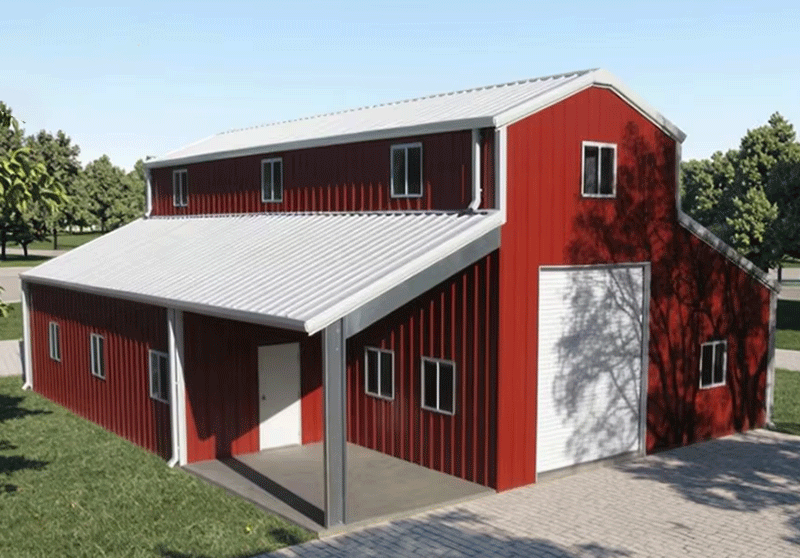
What Is a Prefabricated Barn—and Why It’s Gaining Traction
Prefabricated barns are basically structures built in factories first, then moved to their final spot and put together there. This method brings together careful engineering work with parts that fit together like puzzle pieces, which can cut down building time almost in half without compromising how strong the structure is. The farming industry has been moving faster toward these kinds of buildings lately because regular construction faces so many problems right now. Finding enough workers is tough, materials keep getting more expensive, and rules about what's allowed environmentally are getting stricter every day. That makes prefab options really important for many businesses. These days, barn designs come in all sorts of shapes and sizes too. Some have special ventilation systems for animals, others can be turned into different types of workshop spaces depending on what someone needs. According to various reports from the field, when people build using prefab techniques they end up throwing away about 30 to 40 percent less stuff than with traditional methods. This explains why we're seeing more farmers and business owners turning to prefabs as a practical solution that works well for both their bottom line and the planet.
Key Benefits of Prefabricated Barns: Speed, Cost, and Customization
Prefabricated barns deliver transformative advantages for modern agricultural and commercial operations, combining rapid deployment, cost efficiency, and adaptable designs. Unlike traditional builds hampered by weather delays and sequential workflows, these engineered structures streamline project lifecycles while maintaining structural integrity.
Faster Build Times Compared to Traditional Construction
Factory fabrication allows barn components to be manufactured concurrently with site preparation, slashing project timelines by 30–50%. This parallel workflow eliminates weather disruptions, while standardized assembly protocols ensure on-site erection in days—not months—accelerating operational readiness.
Lower Total Project Costs Without Sacrificing Durability
Centralized manufacturing reduces material waste by up to 30% and minimizes on-site labor expenses. High-strength steel frames and precision-engineered panels withstand extreme loads and environmental stress, yielding lifetime costs 15–25% below conventional builds according to 2024 agribusiness construction audits.
Flexible Design Options for Agricultural, Equestrian, and Storage Uses
Configurable layouts support diverse functions:
- Livestock hubs with integrated ventilation and feeding systems
- Equestrian centers featuring reinforced stalls and injury-preventing rounded corners
-
Multi-use complexes combining equipment storage, workshops, or retail spaces
This scalability future-proofs investments as operational needs evolve.
How Prefabricated Barns Meet Diverse Functional Requirements
Agricultural Applications: Livestock Housing and Equipment Storage
Farmers are finding that prefabricated barns work really well on farms because they come with built-in solutions that actually make sense for keeping animals comfortable and protecting farm equipment. These barns have modular designs that include things like strong floors that can handle heavy machinery, proper ventilation systems that keep the air fresh inside, and stalls that farmers can rearrange based on what works best for their animals. The steel frames used in construction are super sturdy, which means there's plenty of open space without columns getting in the way when moving around big tractors or stacking harvested crops. For those concerned about temperature extremes affecting livestock health or grain storage quality, many manufacturers offer different insulation packages that help maintain consistent temperatures throughout all seasons.
Equestrian & Recreational Use: Ventilation, Safety, and Aesthetics
When it comes to horse farms and riding centers, prefab barns really focus on keeping horses healthy by making sure there's good air circulation throughout the building. This helps cut down on breathing problems and stops dampness from forming inside. The safety aspect is pretty important too. Most prefab barns come with floors that won't let hooves slip around, fixtures with soft corners instead of sharp ones, and materials that resist catching fire if something goes wrong. Looking at how they look, these buildings can actually match pretty well with what's already on the property. Some folks go for those classic sloped roof styles, others prefer straight sided modern looks. Either way, the barn stays strong even when winter storms hit hard. Up top, there's usually plenty of room in the lofts for storing saddle gear and feed supplies. And many models now have adjustable lights installed so caretakers can still work safely after dark without straining their eyes.
Commercial & Hybrid Uses: Workshops, Event Spaces, and ADUs
Prefab barns aren't just for farming anymore. Many businesses find them useful for all sorts of purposes including workshops, small retail stores, and even light manufacturing operations. The open interior spaces work really well for things like woodshops, car repair areas, or temporary market setups. We're seeing more people combine different functions in these structures too. Some folks turn their barns into party spaces complete with bathrooms and kitchenettes added on. And interestingly enough, certain designs actually comply with ADU regulations which means they can be used as extra living spaces that generate income or simply as places for guests. These buildings still hold up under regular foot traffic despite being adapted for multiple uses.
Selecting the Right Prefabricated Barn Partner and Process
Critical Evaluation Criteria: Engineering, Materials, and Warranty
Prioritize manufacturers with third-party certified engineering designs (e.g., AISC compliance) and corrosion-resistant materials like G-90 galvanized steel—proven to extend structural lifespans beyond 50 years with minimal maintenance. Demand comprehensive warranties covering both materials (minimum 20 years) and workmanship, with transparent terms addressing rust-through protection and load-bearing integrity.
Understanding Permitting, Site Prep, and Installation Timelines
Get ahead of potential headaches by talking to local officials about zoning rules and agricultural building regulations before starting any work. Permitting processes often take around six to eight weeks if there are unexpected issues, so better safe than sorry. When preparing the land, don't skip soil compaction tests or proper grading for drainage. These aren't just nice-to-have steps they actually cut down on problems during installation by roughly 40%, according to industry data. And remember to check with the crane service provider about access requirements. We've seen projects get stuck because there wasn't enough clearance space, turning what should be a three to five day job into something that drags on for weeks longer than planned.
FAQ
What are prefabricated barns?
Prefabricated barns are structures built in factories and then assembled at the final location. They offer advantages in terms of speed, cost, and customization.
Why are prefabricated barns becoming popular?
They are gaining traction due to faster build times, lower project costs, environmental benefits, and flexibility in design to meet various needs.
How do prefabricated barns benefit farmers?
These barns provide built-in solutions for livestock comfort and equipment protection, with modular designs supporting diverse operational needs.
Can prefab barns be used for purposes other than farming?
Yes, they can be used for commercial purposes like workshops and even adapted into living spaces that comply with ADU regulations.