
 EN
EN
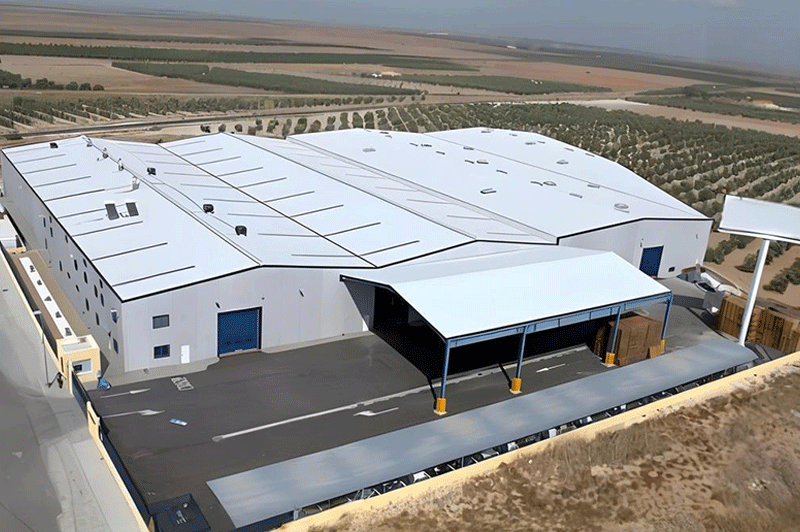
Roof Load Types Impacting Warehouse Truss Design
Warehouse roof truss installations must withstand three primary load categories. Accurate calculation of these forces is non-negotiable for structural integrity and code compliance.
Dead Load: Weight of Roof Assembly, Purlins, and Permanent Attachments
Dead load refers to those constant downward pressures coming from the building itself. Think about things like roof decking materials, insulation layers, purlins running across the roof, plus all that stuff that gets bolted on permanently, such as exhaust vents or skylight installations. When looking at warehouse structures specifically, those horizontal purlin beams that carry roof weight down to the trusses usually account for around 3 to 5 pounds per square foot. Steel decking adds another 2 to 4 psf on top of that. Don't forget about fixtures either! Sprinkler systems alone contribute roughly 1 to 2 psf. Leaving these out can lead to serious miscalculations in bottom chord stress calculations, sometimes off by as much as 15%. That's why accurate dead load assessments matter so much for structural integrity.
Live Load: Storage Racking, HVAC Units, and Maintenance Personnel
Live loads encompass temporary or movable weights. Warehouse-specific considerations include:
- Storage racks: High-density systems impose 20–50 psf concentrated loads at truss panel points
- HVAC units: Rooftop units add 10–30 psf; their placement critically affects load distribution and connection design
- Maintenance personnel: OSHA requires designs to accommodate a 250 lb concentrated live load during repairs
While ASCE 7-22 mandates a minimum 20 psf uniform live load for roofs, warehouses with rooftop storage or mechanical equipment often exceed this baseline significantly—and must be designed accordingly.
Environmental Loads: Snow Accumulation, Wind Uplift, and Seismic Considerations per ASCE 7
Climate-specific hazards demand rigorous, site-specific analysis:
- Snow loads vary regionally (e.g., 30 psf in Michigan vs. 5 psf in Texas). Drifting near parapets can increase local loads by up to 300%, per ASCE 7 Chapter 7.
- Wind uplift forces may reverse truss stresses—converting compression members into tension elements—requiring robust tension connections. Open-plan warehouses face 25% higher uplift risks in hurricane-prone zones.
- Seismic loads, governed by ASCE 7 Section 12.4, dictate bracing configurations and lateral-force-resisting system performance in active fault zones.
A 2023 industry study found that 68% of warehouse truss failures stemmed from environmental load miscalculations—highlighting why generic assumptions are insufficient.
Warehouse-Specific Factors That Alter Roof Truss Load Capacity
Wide-Span Layouts and Truss Spacing Implications for Deflection and Buckling
Roof trusses in warehouses are commonly used for those big open spaces where there's no need for interior columns. The problem comes when these long spans create bigger bending forces in the truss chords. According to basic beam theory, these forces actually grow with the square of how long the span is. When we talk about really wide spans, say over 80 feet, designers usually worry more about how much the structure will sag rather than just whether it can hold up. That's why truss depth gets deeper or different materials might be needed for longer spans. Putting trusses closer together, like every 4 feet instead of every 8 feet, helps shorten the purlin spans and spreads out the weight from things like equipment or people walking around. This makes the whole system less likely to buckle under pressure. Most building codes limit deflection to about L/240 for live loads, mainly because nobody wants ceilings cracking or operations getting disrupted by structural issues down the road.
High-Density Storage Loads and Their Effect on Bottom Chord Tension
When we talk about high density pallet racking systems, they create these concentrated point loads that go straight through the purlins and hit those truss panel points. This puts a lot of tension on the bottom chords, particularly around the middle section of the span. Structural models show that every extra 1000 pounds per square foot stored can push the bottom chord stress up between 15% and 20%. Environmental loads spread out over larger areas, but racking forces create these sharp stress spikes in specific spots. That means engineers need to reinforce connection points, go for heavier chord sections, or rethink how the loads travel through the structure. Keeping those load paths continuous without interruptions remains critical if we want to prevent situations where one failure leads to total system collapse.
Step-by-Step Load Calculation Process for Roof Trusses Warehouse Applications
Gathering Critical Inputs: Bay Dimensions, Usage Classification, and Local Code Requirements
When starting the process, it's important to gather details specific to the warehouse itself. Measure things like bay dimensions including width, length between columns, and note how the roof slopes. Also figure out what the space will actually be used for - whether it's going to hold lots of inventory tightly packed together or if there will be some light manufacturing happening inside. Climate conditions matter too. Snow loads can differ by as much as 40% depending on where in the country the building is located according to standards like ASCE 7-22. Local governments often tweak these rules further so checking those specifics is critical. Take seismic zones as another example. Buildings in Zone 4 need about 30% more strength against sideways forces compared to those in Zone 1 areas. Getting all these numbers right forms the foundation for everything else that follows in the design process and keeps everyone compliant with local regulations.
Applying ASCE 7 Load Combinations for Warehouse Roof Trusses
When designing structures, engineers need to account for several different types of loads working together. Dead loads typically run around 12 pounds per square foot for things like metal decking. Live loads vary between 20 to 25 psf depending on what's stored there. Snow can pile up to 50 psf in areas around the Great Lakes region. And don't forget wind uplift forces either. All these factors get combined according to ASCE 7-22 guidelines. Some combinations matter more than others. Take 1.2D plus 1.6L plus 0.5S for instance. This particular mix controls how much tension develops in the bottom chords of storage areas with heavy contents. Even with programs like Revit doing most calculations automatically, this specific case still needs old fashioned pencil and paper checks. Software definitely speeds things up, no doubt about it. But nothing replaces actual engineering experience when looking at truss shapes, how connections work under stress, or whether the load paths make sense from a structural standpoint.
Validating Against Safety Factors and Industry Standards (AISC, NDS)
Always double check design outputs against those AISC safety factors, which typically range between 1.5 to 2.0 for yield strength calculations. When working with timber components, don't forget to consider the NDS specifications for allowable stresses as well. Steel truss designs need special attention too. The buckling resistance should be at least 25% higher than what we calculate for both axial loads and bending moments according to the latest AISC 360-23 guidelines. And before cutting any metal, get those third party reviews done. Peer validation through stamped calculations isn't just paperwork - it's absolutely critical insurance against costly mistakes during actual fabrication.
Ensuring Compliance and Structural Integrity for Roof Trusses Warehouse Projects
Structural standards compliance isn't optional when it comes to warehouse truss systems. Engineers need to check that everything from dead weight to live loads plus environmental factors meets both IBC guidelines and ASCE 7 specs. For warehouses storing heavy goods, checking bottom chord tension becomes really important. It's not just about making sure things hold up under normal conditions, but also preventing failures during those unexpected moments when forces change suddenly. When fabricating and installing these structures, regular checks are necessary to confirm welds are strong enough, protective coatings against rust are properly applied, and fireproofing materials comply with ASTM standards. After construction completes, keeping track of truss health means doing inspections every two years or so to look for signs of stress cracks forming, metal starting to corrode, or materials simply wearing out over time. All the math work, material test results, and independent lab reports should be kept on file somewhere safe for anyone needing to verify compliance later. And let's face it, long term success depends heavily on watching what happens after installation. Pay special attention to how much snow builds up on roofs and how well the structure resists wind lift in harsh weather areas. Believe it or not, something as small as a single degree Celsius difference in temperature can actually affect how much the trusses bend and flex by about half a percent.
FAQs
What are the main load types that affect warehouse truss design?
The main load types affecting warehouse truss design include dead loads, live loads, and environmental loads such as snow accumulation, wind uplift, and seismic conditions.
Why is calculating dead load important for warehouse truss design?
Calculating dead load is crucial because it comprises constant downward pressures from the roof assembly, purlins, and permanent fixtures, which directly impact the structural integrity of the warehouse.
How can environmental loads vary regionally?
Environmental loads like snow loads can vary significantly depending on the region (e.g., 30 psf in Michigan vs. 5 psf in Texas) and must be analyzed based on site-specific climatic conditions.
What role do live loads play in warehouse roof truss design?
Live loads consist of temporary or movable weights such as storage racks, HVAC units, and maintenance personnel, and they are critical considerations for ensuring the trusses can support additional, dynamic loads.
Why is compliance with standards like ASCE 7 important?
Compliance with standards like ASCE 7 is vital to ensure structural integrity and safety, as these standards provide guidelines for load calculations and design specifications tailored to environmental and building-specific conditions.