
 EN
EN
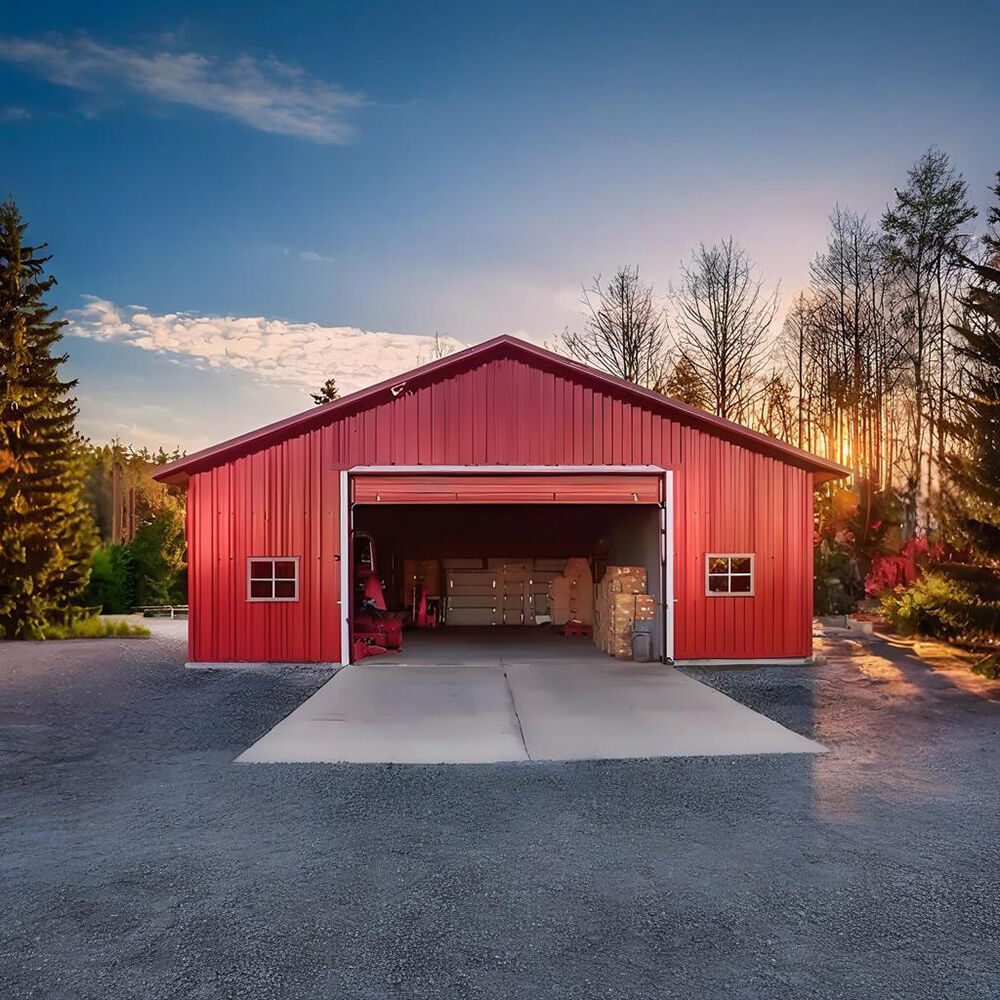
Understanding the Structural Design of a Prefab Warehouse for Sale
Key Steel Structure Systems in Prefabricated Buildings
Prefabricated warehouses rely on steel frames, roofing materials, and wall panels made in factories where conditions are tightly controlled. The welding done here is much better than what happens at job sites, plus there are special coatings applied to fight rust and wear. These improvements mean the final product just looks and performs better overall. When it comes to putting everything together on site, the modular parts come ready to go with holes already drilled in the right places. They also have built-in channels for electrical wiring and plumbing. This cuts down mistakes during assembly and saves a lot of time too. Most contractors report finishing projects somewhere between 30 and maybe even 50 percent faster than they would with regular construction methods.
Common Types of Prefab Warehouse Designs and Their Applications
Three primary designs dominate the market:
- Clear-span structures provide uninterrupted interior space, ideal for bulk storage and large equipment movement
- Modular sectional warehouses support phased expansion, enabling businesses to scale as demand grows
- Cold-formed steel buildings offer enhanced corrosion resistance, making them well-suited for coastal or high-moisture environments
Each design maintains cost efficiencies between $18 and $32 per square foot while addressing distinct operational needs.
How Modular Design Efficiency Impacts Long-Term Usability
Modular prefab warehouses deliver long-term value through scalability. Interchangeable wall panels and expandable roof systems allow for seamless additions like loading docks or vertical extensions without structural overhauls. This adaptability can reduce future renovation costs by up to 60% compared to fixed-structure alternatives.
Evaluating Structural Integrity Before Purchase: What to Look For
During inspection, prioritize these key indicators of structural soundness:
- Weld quality at beam-column joints—look for smooth, uniform seams without cracks
- Foundation bolt alignment within ±3mm tolerance
- Panel resistance to buckling under simulated wind loads
- Paint coating thickness of at least 120µm in harsh climates
Ensure horizontal deflection remains below 1/240 of the span length under full load, a critical benchmark for long-term stability.
Inspecting Critical Structural Components of a Prefab Warehouse for Sale
Identifying Core Components: Frames, Roofing, Walls, and Foundations
When checking out a building's structure, start looking at those four key components first. The steel framework needs to be straight without any bending or rust spots, particularly where the heavy weight rests on connections between beams. For roofs, make sure there's enough pitch so rainwater doesn't collect anywhere. A good rule of thumb is about quarter inch drop for every foot across. Walls need to sit flush together too. If panels leave spaces bigger than three tenths of an inch apart somewhere, that might mean the whole thing has settled unevenly over time. And don't forget to check the foundation carefully either. According to what I've read in trade publications lately, nearly one out of four problems found in prefabricated warehouses actually comes down to poor quality work when pouring concrete bases or not putting enough reinforcing bars into them during construction.
Checking Floors, Doors, Windows, and Ceilings for Damage or Misalignment
When looking at floor surfaces, keep an eye out for any cracks that are bigger than about 1/8 inch wide, or areas where the surface isn't level according to OSHA standards which generally allow up to a 0.5 degree slope before it becomes a problem. For roll up doors, go ahead and run them through several opening and closing motions just to make sure they move smoothly without getting stuck anywhere along the way. Check those window seals too by shining a UV light across them since this helps spot places where the thermal break might be failing over time. And don't forget about ceiling panels either. If there are visible water stains or if parts seem to sag more than roughly 0.4 percent of their total span, these panels probably need replacing sooner rather than later.
Using Standardized Checklists for a Comprehensive Physical Inspection
The ASTM E2018-15 standard is worth looking at seriously since it breaks down 72 specific inspection points for prefabricated buildings. Digital documentation makes sense these days too, especially when combining written notes with timestamped photos that everyone can refer back to later. Facilities that stick to proper inspection protocols tend to spend about 34 percent less on repairs after purchase compared to places where people just eyeball things during walkthroughs. When checking structural integrity, it's important to cross reference what's actually there against what the manufacturer promised. Most specs allow for around plus or minus 5% difference in load capacity ratings, but going beyond that opens up all sorts of problems down the road.
Assessing Durability, Corrosion Resistance, and Longevity
Factors That Affect the Lifespan of Steel Prefab Warehouses
How long a prefab warehouse lasts really comes down to three main factors: environmental exposure, quality of materials used, and how well it was engineered. Steel structures face all sorts of challenges in industrial settings: they get hit by extreme temperatures, chemicals in the air, and constantly support heavy weights day after day. A recent report from the Ponemon Institute shows that almost half (52%) of problems with steel buildings actually stem from poor corrosion protection, costing companies around $740k when repairs are needed. Anyone looking for durability should check if the manufacturer has those important third-party certifications from groups like ASTM or NACE International. These organizations run tough tests, including salt spray exposure and accelerated aging, to prove the metal can stand up to real-world conditions over time.
Corrosion Risks in Coastal or High-Moisture Environments
The salty air and constant moisture along coastlines really speeds up metal corrosion, causing problems like galvanic damage or those pesky pits to appear in about 3 to 5 years when left alone. Steel without any protection starts showing rust pretty quickly too, sometimes within just 18 months. To cut down on these issues, consider using hot dip galvanization or PVDF coatings instead of regular paint; these can slash corrosion rates by around 85%. And don't forget about good design practices either. A simple 2-degree slope for drainage makes a big difference, plus adding some anti-condensation insulation goes a long way toward keeping things lasting longer overall.
High-Grade Coatings and Protective Treatments for Long-Term Value
Advanced protective systems significantly extend service life:
- Epoxy primers resist chemical abrasion in industrial zones
- Zinc-rich paints act as sacrificial anodes, protecting vulnerable welded joints
- Silane-based sealants prevent moisture infiltration at panel seams
A 2024 corrosion resistance study found multi-layer coating systems can extend steel lifespan by 20–30 years, even in aggressive environments like sulfur-rich atmospheres.
Implementing Routine Maintenance to Preserve Structural Quality
Proactive maintenance preserves structural integrity and reduces lifecycle costs. Key practices include:
- Joint integrity checks: Retighten bolted connections to 15–20% above initial torque values annually
- Coating touch-ups: Apply manufacturer-approved primers to scratched or exposed areas
- Drainage maintenance: Clear perimeter trenches regularly to prevent water accumulation
Maintaining a centralized maintenance log has been shown to reduce long-term costs by 34%, ensuring decades of reliable operation.
Verifying Fire Safety and Emergency Preparedness Compliance
Essential Fire Safety Systems in Industrial Prefab Warehouses
Critical fire safety systems include sprinklers covering over 95% of open storage areas, heat and smoke detectors with continuous monitoring, and fire-rated walls providing 60–120 minutes of flame resistance. Facilities equipped with NFPA-compliant alarm systems achieve 32% faster evacuations. Automated suppression systems are particularly effective in limiting fire spread within steel-framed structures.
Emergency Exits, Signage, and Sprinkler System Requirements
Emergency exits must be spaced no more than 75 feet apart in industrial zones. Photoluminescent exit signage ensures visibility during power outages, offering over 90 minutes of illumination. Sprinkler heads require a minimum 18-inch clearance below ceilings to ensure unobstructed spray coverage.
Ensuring Compliance with Local and Industry Fire Safety Standards
Getting third-party inspections done is really important for making sure buildings follow NFPA 101 life safety rules plus whatever local laws apply. Places near the coast face special challenges because salt in the air eats away at materials over time, which is why many jurisdictions insist on corrosion-resistant hardware for those emergency exit doors. Look at the numbers: facilities that keep good records of their compliance checks tend to run into about 60 percent fewer problems during official audits. Smart building managers always double-check their blueprints against standards like NFPA 101's requirements for safe exits. This extra step saves everyone headaches down the road when it comes to avoiding fines or having to shut operations while fixes get made.
Reviewing Maintenance History and Prior Repair Assessments
Why Documented Maintenance Records Matter in Pre-Purchase Evaluation
Maintenance logs act like financial and structural checkups for buildings, showing what parts are wearing out, what repairs have been done before, and whether safety rules were followed properly. According to research from last year on industrial assets, places without proper repair records ended up spending about 34 percent more on maintenance after buying equipment. Looking through these documents can highlight problems that keep coming back again and again, like those pesky roof leaks nobody seems able to fix or foundations that slowly start shifting over time. These kinds of patterns often point to bigger issues hiding beneath the surface that need attention.
Identifying Hidden Costs from Neglected Repairs and Poor Upkeep
| Cost Factor | Short-Term Savings | Long-Term Risk |
|---|---|---|
| Deferred roof repairs | 15–20% | Water damage (structural + inventory) |
| Unaddressed rust spots | 5–10% | Full panel replacements (+300% cost) |
| Skipped HVAC servicing | 8–12% | System failure during peak operations |
Conducting a Professional Repair Assessment Before Finalizing Purchase
When checking out buildings, independent inspectors bring along tools like thermal cameras, perform load tests, and examine welds to get a good look at how structurally sound everything really is. What these experts often find? The numbers don't match up too well with what sellers claim. Most of the time there's around 18 to maybe even 25 percent difference between what's promised and what actually exists when we dig deeper. That kind of gap gives buyers serious bargaining power either to ask for lower prices or demand fixes before finalizing deals. If dealing with structures located near coastal areas or industrial zones where corrosion is a big concern, make sure those inspectors run salt spray tests. This helps determine if the protective coatings applied are doing their job properly against rust and degradation over time.
FAQ
What are the key components to inspect in a prefab warehouse?
Inspect the framework, roofing, walls, and foundations. Ensure beam connections are straight, walls fit flush, enough roof pitch exists, and the foundation is strong without settling issues.
Why are prefab warehouses considered more efficient?
Prefab warehouses are more efficient due to controlled manufacturing conditions, modular assembly, and built-in features that reduce assembly mistakes and speed up completion.
What types of prefab warehouse designs are common?
Common designs include clear-span structures, modular sectional warehouses, and cold-formed steel buildings, each offering distinct benefits like uninterrupted spaces or corrosion resistance.
How can corrosion be managed in prefab warehouses?
Manage corrosion using protective coatings like hot dip galvanization and maintaining drainage systems to prevent moisture accumulation.
Why are documented maintenance records important?
These records help highlight recurring problems and overall compliance, potentially reducing maintenance expenses and identifying long-term structural issues.
Table of Contents
- Understanding the Structural Design of a Prefab Warehouse for Sale
- Inspecting Critical Structural Components of a Prefab Warehouse for Sale
- Assessing Durability, Corrosion Resistance, and Longevity
- Verifying Fire Safety and Emergency Preparedness Compliance
- Reviewing Maintenance History and Prior Repair Assessments
- FAQ