
 EN
EN
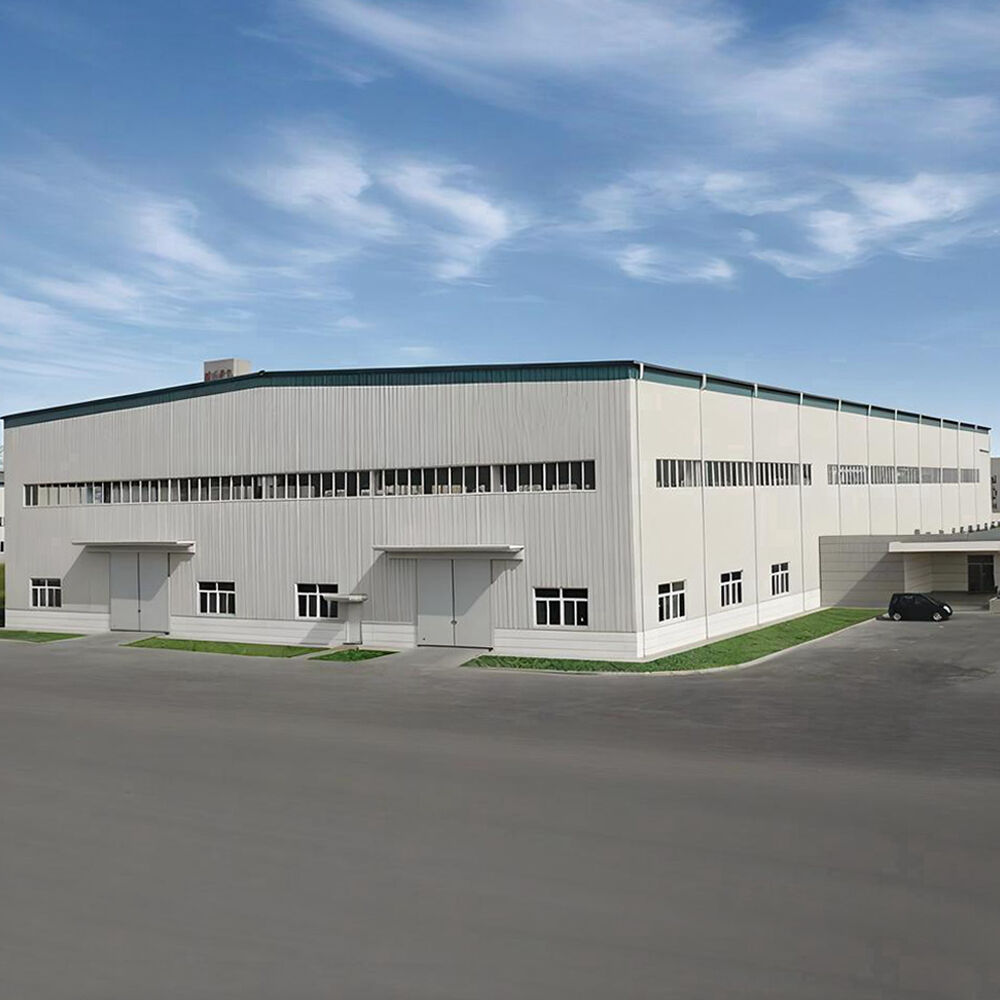
Core Cost Components of a Prefab Warehouse for Sale
Understanding the Base Cost of a Prefab Warehouse for Sale
Prefab warehouse pricing starts with structural essentials: standardized steel-frame designs typically range from $17–$20 per square foot. These base figures cover only fundamental components and exclude customizations, site work, or additional features, serving as a starting point for scalable budgeting.
Material Impact on Prefab Warehouse Costs and Initial Pricing
Steel is used in 83% of prefab warehouses (SteelCo Buildings 2023) and remains central to cost modeling. While durable and cost-efficient over time, steel prices fluctuate annually by 12–18% due to market volatility. Alternatives like aluminum or composite panels may reduce initial outlays but often compromise load capacity and longevity.
Labor Costs in Prefab Warehouse Construction and Assembly
Despite requiring 30–50% less onsite labor than traditional construction, skilled crews for steel assembly still represent 22–28% of total project costs. In regions with labor shortages, hourly rates can reach $45–$65, underscoring the efficiency of pre-engineered systems that simplify installation.
Delivery and Installation Costs: Hidden Expenses Revealed
Transportation costs vary significantly—shipping a 15,000 sq ft unit over 500 miles adds $8,200–$12,500. Site-specific needs such as crane rentals or land grading can increase expenses by $15–$25 per square foot, costs frequently excluded from initial quotes.
Are Quoted Prices Truly All-Inclusive? Transparency in Pricing
Only 41% of suppliers include permitting, foundation work, and utility connections in their listed prices. A 2023 survey found buyers paid an average of 17% extra for unquoted items like fireproofing or seismic upgrades. Always cross-check quoted inclusions against local building codes before signing contracts.
Size, Design, and Customization: How Specifications Influence Price
Warehouse Size and Its Impact on Cost: Scaling Economies Explained
The price tag for prefabricated warehouses typically ranges somewhere around $18 to $36 per square foot according to Storage Building Company data from 2025. Bigger buildings tend to be cheaper per square foot because manufacturers can spread out their costs over more space. For instance, someone building a 10,000 square foot facility might save about 20 percent compared to what they'd pay for just 2,000 square feet since these larger structures are easier to produce in standard sizes. But things change when we get into really big spaces though. Once a project goes past 50,000 square feet, those cost savings start disappearing fast. That's when extra engineering work becomes necessary along with specialized equipment that drives up expenses significantly.
Design Considerations for Prefab Metal Warehouses Based on Layout
Clear-span designs eliminate interior columns but increase steel use by 12–18% compared to multi-bay layouts. Roof pitches steeper than 1:12 require reinforcements costing $0.80–$1.20 per sq.ft., while column-free spaces demand heavier gauge steel walls (Metal Building Outfitters 2023).
Interior Fit-Outs and Customizations That Increase Price
| Customization Tier | Cost Impact | Common Features |
|---|---|---|
| Basic | +5–10% | Standard doors, minimal insulation |
| Advanced | +15–25% | HVAC integration, fire-rated partitions |
| Premium | +30–40% | Crane systems, chemical-resistant coatings |
Electrical and climate control systems make up 38% of upgrade costs in mid-tier builds, based on 2023 industry benchmarks.
Case Study: Cost Difference Between Standard and Fully Customized Units
A 2023 analysis of 50 warehouse projects showed fully customized units averaged $41.20/sq.ft., compared to $29.40/sq.ft. for standard models. Key cost drivers included:
- Architectural glass facades (+$4.80/sq.ft.)
- 14% thicker steel for seismic compliance
- Automated loading dock systems
This cost variance analysis highlights how operational needs directly impact final pricing.
Material Selection and Market Trends Impacting Prefab Warehouse Costs
Steel Warehouse Construction Cost Versus Alternative Materials
Steel offers a 15–20% cost advantage over concrete in typical 10,000 sq.ft. prefab projects. Wood may appear 30% cheaper upfront, but higher maintenance erases this benefit within 5–7 years. Aluminum composite panels are gaining traction, reducing weight by 40% without compromising strength—ideal for relocatable structures like the prefab warehouse for sale.
Construction Materials Affecting Warehouse Price Over Time
Material degradation contributes to 34% of lifecycle costs (Ponemon 2023). Galvanized steel roofs retain 98% reflectivity for over 12 years, outperforming asphalt alternatives that degrade within 8 years. Advances in UV-resistant polymer coatings have extended wall panel warranties from 10 to 25 years, with manufacturing scale driving a 18% price reduction since 2021.
Material Cost Considerations During Supply Chain Fluctuations
Steel prices surged 42% peak-to-trough between 2022 and 2024, prompting suppliers to adopt hybrid pricing—60% fixed, 40% index-linked. To stabilize costs, manufacturers now stockpile materials 3–6 months ahead, improving cost predictability by 12%. Dual sourcing has cut lead times for critical components like I-beams and insulation cores from 90 to 45 days.
Rising Demand for Sustainable Materials in Prefab Designs
In 2024, 68% of buyers preferred warehouses made with recycled materials, accepting a 9–14% premium for units using 90%+ post-industrial steel. Cross-laminated timber (CLT) use grew 200% since 2022 in cold storage applications due to its superior thermal performance. Full material transparency is now standard, helping manufacturers meet EU sustainability benchmarks for circular construction.
How Regional Building Codes and Regulations Affect Prefab Warehouse for Sale Options
Local regulations cause up to 40% variation in prefab warehouse costs. Coastal areas like Florida require hurricane-resistant framing and roofing, increasing material costs by 18–22% versus inland Midwest builds. California's seismic standards add $8–$12 per sq.ft. for foundation upgrades, while New York's energy codes raise insulation costs by 15–20%.
Site Preparation Challenges and Their Effect on Final Cost
Unprepared sites can incur over $15,000 in extra groundwork:
- Retaining walls for sloped terrain ($9,500 average)
- Soil stabilization for weak substrates ($4,200–$7,800)
- Utility extensions in remote locations ($3,500 per 100 ft)
Geotechnical surveys help avoid these overruns, reducing unexpected costs by 60% across 82 projects studied in 2023.
Remote Locations Doubling Transportation and Labor Fees
Deliveries beyond 300 miles from fabrication plants increase logistics costs by 120–150%, with specialized transport and cranes adding $18,000+ in mountainous or rural zones. Labor scarcity inflates assembly costs by 20–35%, leading 63% of Wyoming buyers to opt for turnkey installations rather than DIY kits.
Prefab vs. Conventional Construction: Evaluating Long-Term Value
Comparative Analysis: PEB Efficiency and Cost Advantages
Pre-engineered buildings (PEBs) shorten construction timelines by 30–50% through parallel factory production and site prep. This efficiency reduces labor needs—a 10,000 sq.ft. prefab warehouse requires 15–20 fewer workers onsite than conventional builds, saving $45,000–$60,000 (Construction Economics Journal 2023)—a key consideration when evaluating a prefab warehouse for sale.
Long-Term Savings in Maintenance and Energy Use with Prefab Systems
Precision manufacturing leads to 22% lower annual maintenance costs for prefab warehouses. After 15 years, steel PEBs maintain 90% structural integrity, compared to 78% for traditional buildings. Insulated metal panels reduce HVAC usage by 18–27%, with premium insulation paying for itself within seven years according to energy modeling.
When to Choose Conventional Over Prefab Warehouse Solutions
Conventional construction is better suited for:
- Sites with extreme slopes (>15%) needing complex foundations
- Facilities requiring unique architectural elements (e.g., curved walls)
- Projects in regions where labor costs are below $18/hour (Global Construction Wage Index 2023)
Higher Upfront Cost but Lower Lifecycle Expense: The Industry Paradox
Though prefab warehouses carry 12–15% higher initial costs, their 25-year lifecycle expenses are 31% lower than traditional builds. The advantage grows in areas with strict energy codes—prefab designs achieve compliance 40% faster, avoiding $120,000–$180,000 in redesign fees common with conventional methods.
FAQ Section
What are the key components that affect the cost of a prefab warehouse?
Key components include the cost of steel materials, labor, delivery and installation, customization, and site-specific needs.
How does the choice of materials impact the overall cost?
The choice of materials, such as steel, aluminum, or composite panels, affects both initial and lifecycle costs due to their durability, maintenance requirements, and price volatility.
What should I consider regarding warehouse size and design?
Larger warehouses tend to cost less per square foot due to economies of scale, but unique design elements and larger sizes over 50,000 sq.ft. can increase costs.
Why are prefab warehouses considered more efficient?
Prefab warehouses are more efficient due to reduced construction timelines, lower labor costs, precision manufacturing, and energy-saving designs.
How do local building codes affect prefab warehouse costs?
Local building codes, such as those requiring hurricane-resistant or seismic-compliant designs, can increase material and construction costs significantly.
Table of Contents
- Core Cost Components of a Prefab Warehouse for Sale
- Size, Design, and Customization: How Specifications Influence Price
- Material Selection and Market Trends Impacting Prefab Warehouse Costs
- How Regional Building Codes and Regulations Affect Prefab Warehouse for Sale Options
- Prefab vs. Conventional Construction: Evaluating Long-Term Value
-
FAQ Section
- What are the key components that affect the cost of a prefab warehouse?
- How does the choice of materials impact the overall cost?
- What should I consider regarding warehouse size and design?
- Why are prefab warehouses considered more efficient?
- How do local building codes affect prefab warehouse costs?