
 EN
EN
Assessing Your Storage Needs and Operational Workflow
Properly sizing a prefabricated warehouse begins with analyzing three critical dimensions: current inventory volume, workflow patterns, and scalability requirements.
Evaluating Current Inventory Volume and Growth Projections
Looking at what's currently in stock across different product lines makes sense before anything else. Take note of how much space things occupy and their actual weight too. The numbers don't lie either - warehouses that budget for around 12 to 15 percent growth each year end up spending about 40 percent less on moving stuff around after five years, as various industry reports have shown. When planning storage needs, it pays to look back at past sales records while keeping an eye on what experts predict for the market. This helps create a prefab warehouse layout that works during regular times but can also handle those crazy busy periods when demand suddenly spikes.
Aligning Warehouse Layout with Operational Workflow Efficiency
Take a close look at how products move through your facility from when they arrive until they ship out the door this helps spot where things tend to back up. According to some recent research published last year, warehouses that adopt those zigzag shaped layouts actually cut down on how far pickers have to walk by almost 30 percent over old fashioned straight line setups. Put those fast moving items right next to where packages get packed makes sense obviously. Also create different areas for storing large quantities, handling returned goods, and doing extra work like putting together kits or adding special touches these little changes can really make operations run smoother day to day.
Matching Storage Capacity and Load Requirements to Business Demands
Before setting up storage areas, it makes sense to figure out how much weight different goods will put on floors and racks. Take automotive parts distributors as a case in point they typically need floor loads around 150 pounds per square foot, which is actually double what most textile warehouses deal with. The numbers matter because wrong calculations can lead to serious safety issues down the road. When matching storage solutions to inventory types, lighter stuff like household products works well on those stacked shelves we see everywhere. But when dealing with longer, heavier items such as pipes or building materials, cantilever racks become necessary. These specialized systems allow proper access without risking damage to either workers or merchandise during handling operations.
Optimizing Space Utilization in Prefabricated Warehouse Designs
Maximizing Vertical Space with High-Density Storage Solutions
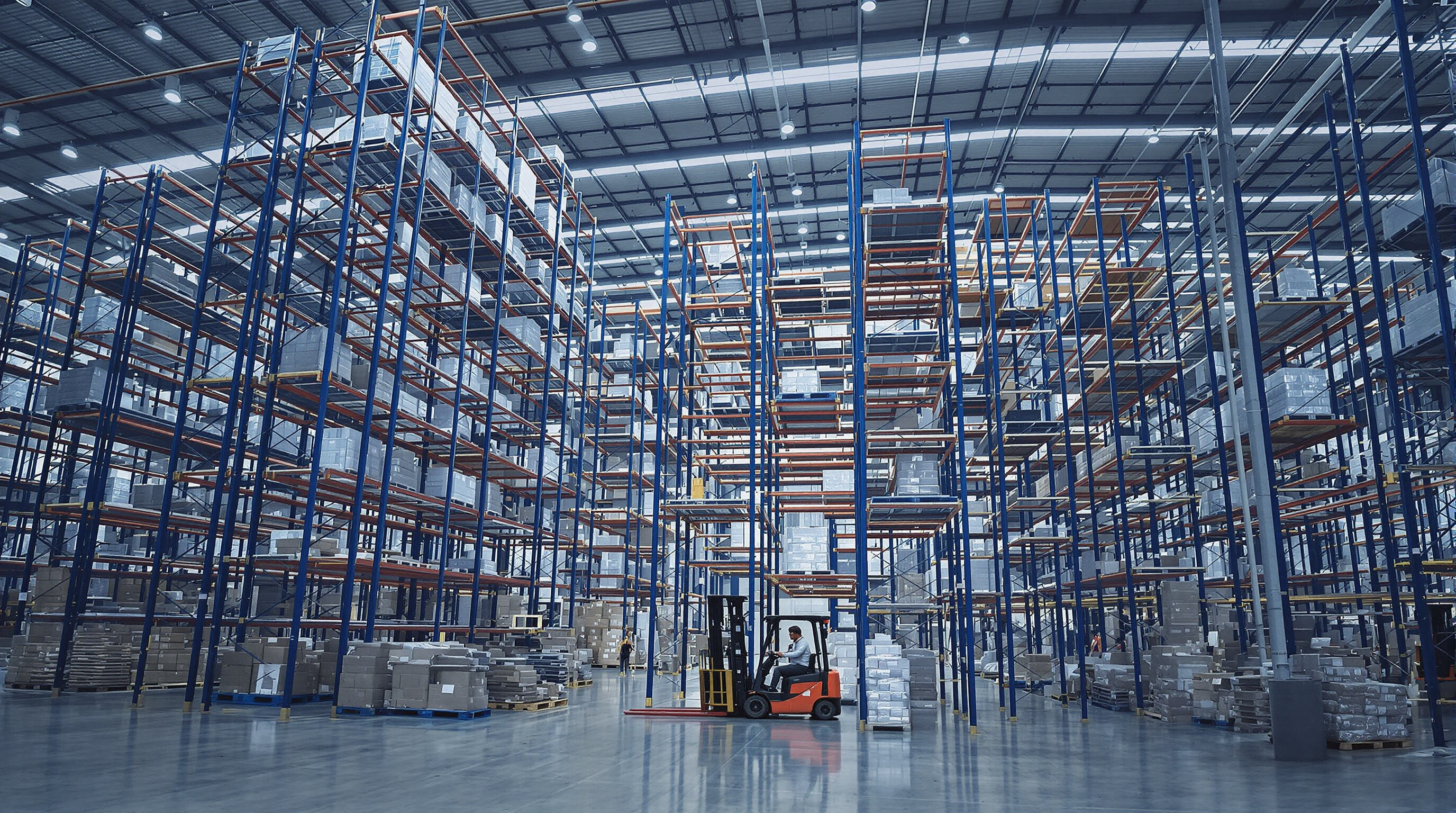
Prefab warehouses can boost storage capacity by around 30 to 40 percent when they focus on making good use of vertical space according to the Warehousing Efficiency Forum report from last year. These facilities often install high bay racking that goes up to about 45 feet tall. When paired with those narrow aisle forklifts, companies end up storing roughly two to three times as many pallets in basically the same floor area. For extra storage options, mezzanine floors work well for keeping lighter items off the ground level. And in taller buildings, automated stacker cranes make retrieving stored goods much more efficient than traditional methods ever were.
Designing Flexible Racking and Shelving Systems for Modular Adaptability
Adjustable cantilever racks and sliding shelving units accommodate irregularly shaped items such as piping or automotive parts, reducing wasted aisle space by 15–20%. Modular boltless shelving supports rapid reconfiguration during seasonal spikes or product mix changes. Cross-docking zones with collapsible staging racks further optimize floor space for fast-moving goods.
Case Study: Layout Optimization in a Modular Prefabricated Warehouse
A textile distributor increased storage density by 52% after redesigning their prefabricated warehouse. Key improvements included:
- Vertical carousel systems for fast-moving fabrics, utilizing 12.5 ft of vertical space
- Gravity flow racks positioned directly at packing stations to eliminate horizontal transport
-
Retractable conveyor belts that fold into walls during peak storage periods
These changes reduced the need for expansion by 1,200 m² while maintaining 99.7% inventory accessibility.
Selecting the Right Storage Systems for Prefabricated Warehouses
Comparing Pallet Racking, Cantilever, and Mezzanine Storage Systems
Getting the most out of prefabricated warehouses really comes down to matching storage solutions with what the business actually needs day to day. Most warehouses these days rely heavily on pallet racking systems, which according to industry data from MHEDA in 2023 accounts for around 85% of all logistics facilities. These systems let workers grab specific items easily through different setups like selective racks where each pallet is accessible individually, drive-in configurations that maximize space but require some planning, or push-back systems that work well for high turnover products. For those dealing with longer or oddly shaped items such as timber beams or metal pipes, cantilever racks are the way to go since they can handle these bulky goods without causing damage. And when floor space becomes tight, mezzanine floors offer a smart solution too, typically tripling available storage area without needing any additional land or construction costs.
Choosing Systems Based on Product Type and Access Frequency
Lightweight electronics typically require static shelving with 50–200 lb capacity per shelf, whereas automotive parts demand cantilever racks capable of supporting 5,000+ lb loads. High-turnover items benefit from pallet flow racks, which reduce picking time by 30% (Material Handling Institute 2023), while low-frequency archival items are better suited to compact mobile shelving.
Integrating Automated Storage and Retrieval Systems (AS/RS) in Prefab Structures
AS/RS solutions are increasingly common in prefabricated warehouses, boosting storage density by up to 400% compared to manual systems. Shuttle-based vertical lift modules achieve 98% inventory accuracy in pharmaceutical storage, and automated guided vehicles (AGVs) synchronize with rack layouts to maintain throughput during peak cycles.
Trend Analysis: Smart Warehouse Technologies in Prefabricated Facilities
More than half (around 62%) of recently built prefab warehouses are starting to include those smart rack sensors connected to the internet, allowing them to keep tabs on how much weight each shelf can handle right then and there according to Logistics Tech Review from last year. When it comes to keeping things where they belong, block chain tech helps slash misplaced items down by about 44%. And get this - those little helper robots called cobots that work next to the storage racks have managed to knock down order mistakes by nearly 51% during test runs. So even though some might think prefabs aren't as high tech as regular warehouses, these numbers tell another story altogether.
Ensuring Customization and Scalability for Future Growth
Designing Modular Storage Layouts for Easy Expansion
Prefabricated warehouses offer superior adaptability, with modular layouts enabling 40–60% capacity increases without structural modifications. Bolt-on wall panels and relocatable shelving allow seamless reconfiguration, and standardized components ensure compatibility during expansion. For instance, cross-docking areas can transition to bulk storage in days, minimizing operational downtime.
Planning Phased Implementation of Scalable Warehouse Infrastructure
Phased implementation reduces upfront costs while maintaining continuity. Businesses using staged prefab expansions saved 22% in capital expenditures compared to single-phase builds, according to a 2024 logistics industry report. Begin with core storage zones, then add mezzanine platforms or climate-controlled sections as demand grows, aligning infrastructure investment with revenue milestones.
Case Study: Expanding a Prefabricated Warehouse to Meet Rising Demand
One consumer goods company managed to double their storage area in just 18 months by going with modular prefabs. They started off with a warehouse around 15,000 square feet big and kept about 30 percent empty for when they needed more racks later on. After that, they added vertical stacking solutions along with automated conveyor belts, all while keeping normal business running smoothly. The whole expansion paid for itself in 14 months thanks to avoiding expensive moves and seeing inventory move out 35 percent faster than before.
Evaluating Cost, Durability, and Long-Term Value of Prefabricated Warehouses
Balancing upfront costs with lifecycle ROI and maintenance savings
Although prefabricated warehouses may have 10–20% higher initial costs than traditional builds, their lifecycle ROI justifies the investment. Steel prefabricated structures typically complete 30–50% faster, allowing operations to begin 3–6 months earlier. Over 20 years, owners save $12–$18 per square foot in energy and maintenance due to corrosion-resistant materials and integrated insulation.
Cost comparison: Custom vs. standard prefabricated warehouse models
| Factor | Custom Prefab Models | Standard Prefab Models |
|---|---|---|
| Upfront Cost | 15–25% higher | Baseline |
| Lead Time | 8–12 weeks | 4–6 weeks |
| Expansion Flexibility | Built-in modular connectors | Limited to preset configurations |
| Lifespan | 25–30 years | 20–25 years |
Standard models suit businesses needing less than 90,000 sq. ft. immediately, while custom designs are ideal for enterprises projecting 10–15% annual growth.
Assessing structural durability and environmental resilience
The galvanized steel frames used in prefab warehouses can handle pretty intense conditions, surviving winds as high as 150 miles per hour and supporting snow loads exceeding 30 pounds per square foot. These specs mean most structures will work fine across about 85 percent of all climate zones found throughout North America. The newer coating technologies applied to these materials cut down on rust problems by roughly 40%, according to recent industry standards from last year's testing reports. When it comes to keeping things cool inside, those warehouses often feature walls lined with polyurethane insulation that keeps temperatures stable even during extreme weather events. The insulation has really good thermal properties too, with conductivity rates between 0.02 and 0.03 watts per meter kelvin, which basically means less heat transfer and better energy efficiency overall.
Evaluating site conditions and foundation requirements for prefab deployment
According to a recent geotechnical study from 2024, around two thirds of all unexpected costs in prefabricated warehouses come down to poor soil testing practices. When site bearing capacity exceeds 2,500 pounds per square foot, most projects end up needing regular concrete slabs. But if there's a high water table present, things get complicated fast. Contractors often have to install pile foundations instead, which can tack on anywhere between four and six dollars extra per square foot. And let's not forget about the basics either. Getting the land properly graded and setting up good drainage systems actually stops about three quarters of all moisture problems that cause structural damage in areas with moderate climates.
FAQ
Why is it important to evaluate inventory volume for prefabricated warehouses?
Evaluating inventory volume ensures that the warehouse can handle current and projected growth, reducing costs associated with moving inventory over time.
How do zigzag layouts improve operational efficiency?
Zigzag layouts reduce picker walking distance by nearly 30%, increasing productivity compared to straight line setups.
What are the benefits of modular prefabricated warehouses?
Modular prefabricated warehouses offer flexibility, allowing businesses to easily expand storage capacity without major structural changes.
Are prefabricated warehouses durable?
Yes, prefabricated warehouses are built using galvanized steel frames capable of withstanding harsh weather conditions, ensuring long-term durability.
How do automated systems in prefab warehouses increase efficiency?
Automated systems boost storage density by up to 400%, improve inventory accuracy, and reduce order mistakes significantly.
Table of Contents
- Assessing Your Storage Needs and Operational Workflow
- Optimizing Space Utilization in Prefabricated Warehouse Designs
- Selecting the Right Storage Systems for Prefabricated Warehouses
- Ensuring Customization and Scalability for Future Growth
- Evaluating Cost, Durability, and Long-Term Value of Prefabricated Warehouses
- FAQ