
 EN
EN
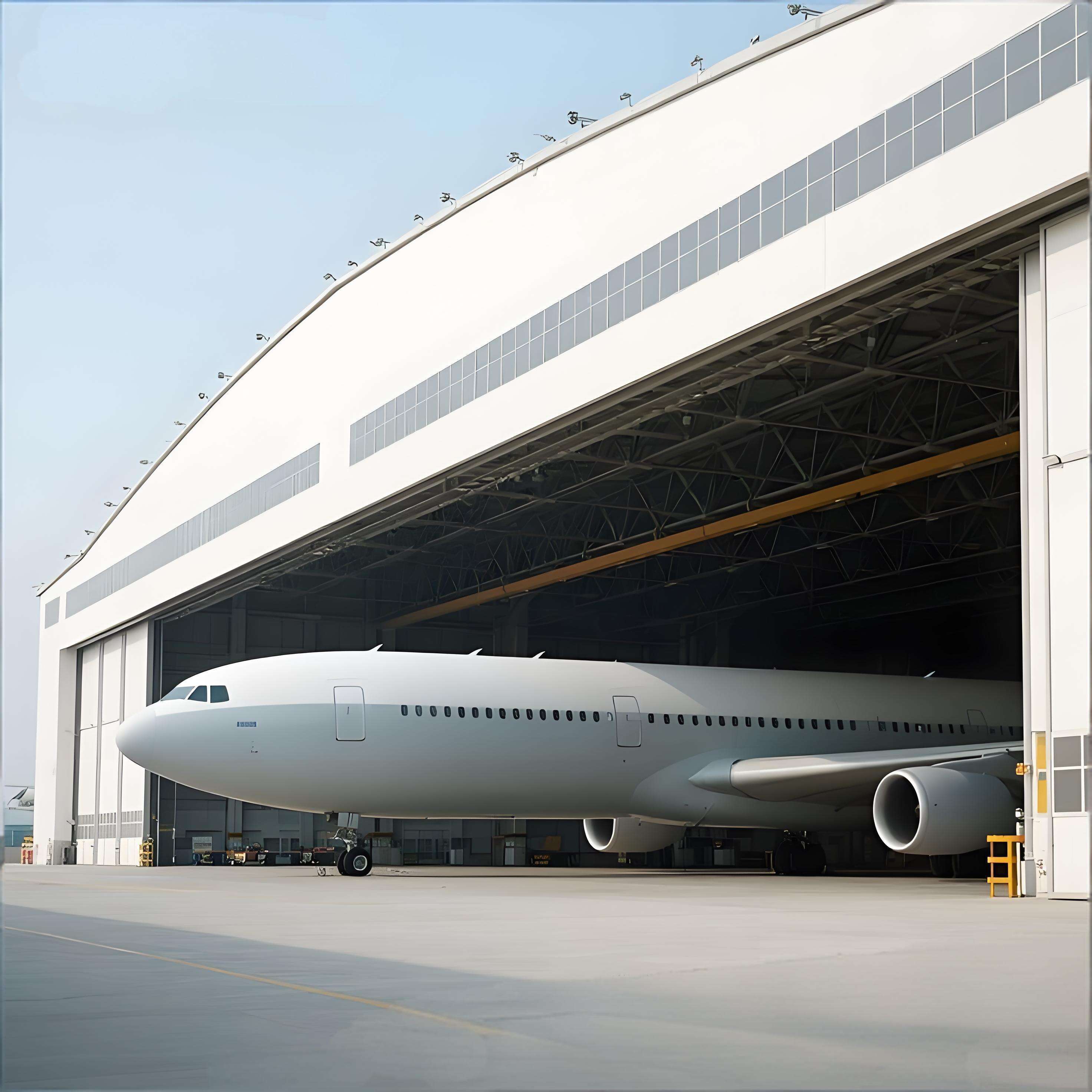
Defining Core Requirements: Aircraft Compatibility, Clear Span, and Functional Layout
Matching steel structure hangar dimensions to large aircraft specifications (wingspan, tail height, turning radius, and weight)
Getting hangar dimensions right starts with knowing exactly what kind of aircraft will be stored there. The wingspan sets the basic width needed, while tail height affects how much headroom must be available inside. Turning radius matters too since it influences the overall shape of the hangar floor plan for safe movement. And let's not forget aircraft weight requirements that determine if the floor can handle the load. Take something big like a Boeing 747-8 with its massive 224 foot wingspan and 63 foot tall tail section. Hangars for these planes need at minimum around 250 feet across and about 70 feet high. Then there are heavy transport planes such as the Antonov An-124 which weighs in at almost 900,000 pounds. These require special reinforced concrete floors capable of supporting gear loads over 250 psi according to FAA guidelines found in Advisory Circular 150/5300-13A. Leaving space between 15 to 30 feet all around the wings and front nose area makes sense for ground crews working on maintenance tasks and also gives room for any new aircraft additions down the road without having to tear everything apart later.
Why clear span design is essential for unobstructed aircraft movement—and how it shapes steel frame configuration
Getting rid of columns inside aviation hangars isn't just preferred, it's absolutely essential. Without those pesky obstructions standing in the way, planes can be positioned safely without risk of collisions. Maintenance crews also get better access across the entire hangar floor with their heavy equipment, plus everyone moves around much more efficiently. To achieve this open space, most hangars go with rigid frame steel structures. These buildings rely on special truss systems or tapered steel beams that carry all the weight from the roof down to the edges of the building, which means no need for interior supports. For hangars meant to house two aircraft at once, we're talking about clear spans over 100 meters long, made possible by strong ASTM A992 steel. The whole framework has to handle pretty intense forces too - think about how wind tries to lift the roof off, earthquakes shake things up, and temperature changes cause materials to expand and contract. All these factors require special connections between structural components while still keeping everything within tight tolerances (like L/400 for roofs and L/360 for floors). When done right, this kind of construction gives maximum usable space inside, makes day-to-day operations smoother, and helps keep maintenance work on schedule when timing matters most.
Engineering Structural Integrity: Load Capacity, Wind Resistance, and Seismic Compliance for Steel Structure Hangars
Designing aircraft storage facilities demands rigorous structural validation to withstand operational and environmental stresses. Steel structure hangars leverage rigid-frame engineering to distribute forces efficiently across the framework, ensuring resilience against extreme conditions.
Rigid-frame steel engineering: Calculating dead, live, wind, and dynamic loads per ASCE 7 and IBC
Structural integrity begins with precise load analysis per ASCE 7 and the International Building Code (IBC). Engineers quantify:
- Dead loads: Permanent weights—including roofing systems (avg. 12 psf), insulation, and lighting fixtures
- Live loads: Variable forces from maintenance equipment, personnel, and stored parts (minimum 20 psf, often increased to 50+ psf in heavy-maintenance zones)
- Wind loads: Uplift and lateral pressures—up to 170 psf in coastal hurricane zones—addressed via aerodynamic roof profiles and moment-resisting connections
- Dynamic loads: Aircraft taxi vibrations, GSE impacts, and crane-induced oscillations
Rigid frames manage these multidirectional forces without deformation by channeling them through continuous beams and base plates anchored to deep foundations. High-strength steel (Grade 50 or higher) delivers optimal strength-to-weight performance—reducing material volume while maintaining stiffness and fatigue resistance over decades of service.
Integrating FAA Advisory Circular 150/5300-13A and NFPA 409 requirements into structural design validation
Aviation-specific standards elevate structural validation beyond general building codes. FAA AC 150/5300-13A mandates:
- Minimum clearance zones to mitigate wingtip vortex hazards
- Floor load capacities calibrated to aircraft gear configurations (e.g., 250 psi for Airbus A380 main landing gear)
NFPA 409 requires:
- Fire-rated structural elements—including 2-hour fire-resistance-rated columns and beams
- Seismic bracing compliant with ASCE 7 Zone 4 criteria in high-risk regions
Validation includes digital prototyping to simulate earthquake forces up to 0.6g, confirming steel’s ductility absorbs 35% more seismic energy than concrete alternatives. These integrated protocols ensure simultaneous compliance with operational safety, disaster resilience, and long-term asset protection—critical when housing aircraft with daily operational values exceeding $740,000 (Ponemon Institute, 2023).
Optimizing Access: Door Systems, Placement, and Integration with Steel Structure Hangar Architecture
Selecting and sizing high-performance doors (megadoors, vertical lift, jack-beam) for wide-body and heavy aircraft entry
When choosing hangar doors, there are basically three things that matter most: how big the aircraft actually is (including wingspan plus at least 20 extra space around it, plus the tail height), how often the facility needs to open and close the doors, and what kind of physical limitations exist at the location itself. Vertical lift doors go straight up into the ceiling area, which works really well when there's not much headroom available or when overhead cranes need clear access above the hangar floor. Then we have jack beam systems that swing out sideways using hydraulics to help them move. These are super sturdy and can handle those massive military planes like the C-5M Galaxy without any problems. For situations where the door needs to cover over 500 feet wide, sliding megadoors make sense from a budget standpoint, although they do take up quite a bit of space on either side of the opening, so planning ahead for that extra room is important.
Every type of door needs to work with the main steel frame structure. This means transferring all those forces from wind, earthquakes, and regular use through things like reinforced lintels, moment connected jambs, and proper connections to the foundation. The hydraulic jack beam system actually cuts down on frame movement quite a bit compared to older roller systems, especially important when dealing with massive aircraft weighing over 300 tons. Modern automated controls come with features that detect obstacles and respond to changing wind speeds, which makes these doors much more reliable even in tough conditions. When putting everything together at the end, engineers have to think about keeping corrosion protection continuous across joints, reducing heat transfer issues between materials, and making sure everything lines up with how the whole hangar handles stress and weight distribution.
Leveraging Steel’s Inherent Advantages: Fire Safety, Long-Term Durability, and Future-Ready Scalability
Steel hangar structures offer some serious safety benefits because they won't burn. Steel doesn't catch fire or spread flames when exposed to high temperatures, so the whole structure stays standing even in intense heat situations. That matters a lot for places storing things like airplane fuel, hydraulic oils, and all sorts of cleaning solvents that can easily start fires. Add on some special fire resistant coatings (the kind tested under ASTM E119 standards) and these steel frames can hold up for two full hours against flames according to NFPA 409 regulations. This gives people plenty of time to get out safely and protects valuable equipment from getting destroyed in case of a fire emergency.
Steel structures stand out for their long life span beyond just how they handle fires. The galvanized parts and those composite walls and roofs can withstand all sorts of harsh conditions over many years. We're talking about things like road salt from winter melting, accidental fuel leaks, salty coastal air, and the constant freeze-thaw cycle that wears down other materials. Maintenance costs stay low because these structures don't need frequent repairs. Compared to traditional materials like wood or brick, steel doesn't suffer from rotting, bending out of shape, pest problems, or gradual breakdown. This means buildings last longer without costly fixes, which makes a big difference in overall operating expenses throughout their lifespan.
Steel has something going for it when it comes to building for the future because of its impressive strength compared to weight. When companies want to expand their facilities later on, they can just add modules like bigger storage areas, higher ceilings, or stronger floors. These additions work well since everything was built with standardized parts from the start. The whole system adapts nicely to changes in what airlines need now and will need tomorrow, especially as newer large planes and electric or hybrid aircraft become more common. And there's another bonus too. Most steel used in construction already contains around 93% recycled material according to industry standards. At the end of its life cycle, steel buildings can be completely recycled again. Plus, these structures allow for better insulation options which helps reduce heating and cooling costs by roughly 30% over time.
FAQs
What factors determine the size of a hangar for large aircraft?
The size of a hangar is determined by the aircraft's wingspan, tail height, turning radius, and weight, which dictate the dimensions needed to safely accommodate and maneuver the aircraft.
What is clear span design, and why is it important?
Clear span design eliminates interior columns in a hangar, allowing unobstructed movement and positioning of aircraft, and improving access for maintenance crews.
How is structural integrity ensured in steel hangars?
Steel hangars use rigid-frame engineering to distribute various forces such as dead loads, live loads, wind loads, and dynamic loads efficiently across the framework, ensuring resilience against operational and environmental stresses.
What types of doors are suitable for wide-body aircraft hangars?
Common door systems for wide-body aircraft hangars include vertical lift doors, jack beam systems, and sliding megadoors, each offering unique advantages based on facility needs and physical constraints.
What benefits does steel offer for hangar construction?
Steel offers fire safety, durability, scalability, and environmental benefits such as recyclability, making it an ideal choice for long-lasting and future-ready hangar facilities.
Table of Contents
- Defining Core Requirements: Aircraft Compatibility, Clear Span, and Functional Layout
- Engineering Structural Integrity: Load Capacity, Wind Resistance, and Seismic Compliance for Steel Structure Hangars
- Optimizing Access: Door Systems, Placement, and Integration with Steel Structure Hangar Architecture
- Leveraging Steel’s Inherent Advantages: Fire Safety, Long-Term Durability, and Future-Ready Scalability
- FAQs