
 EN
EN
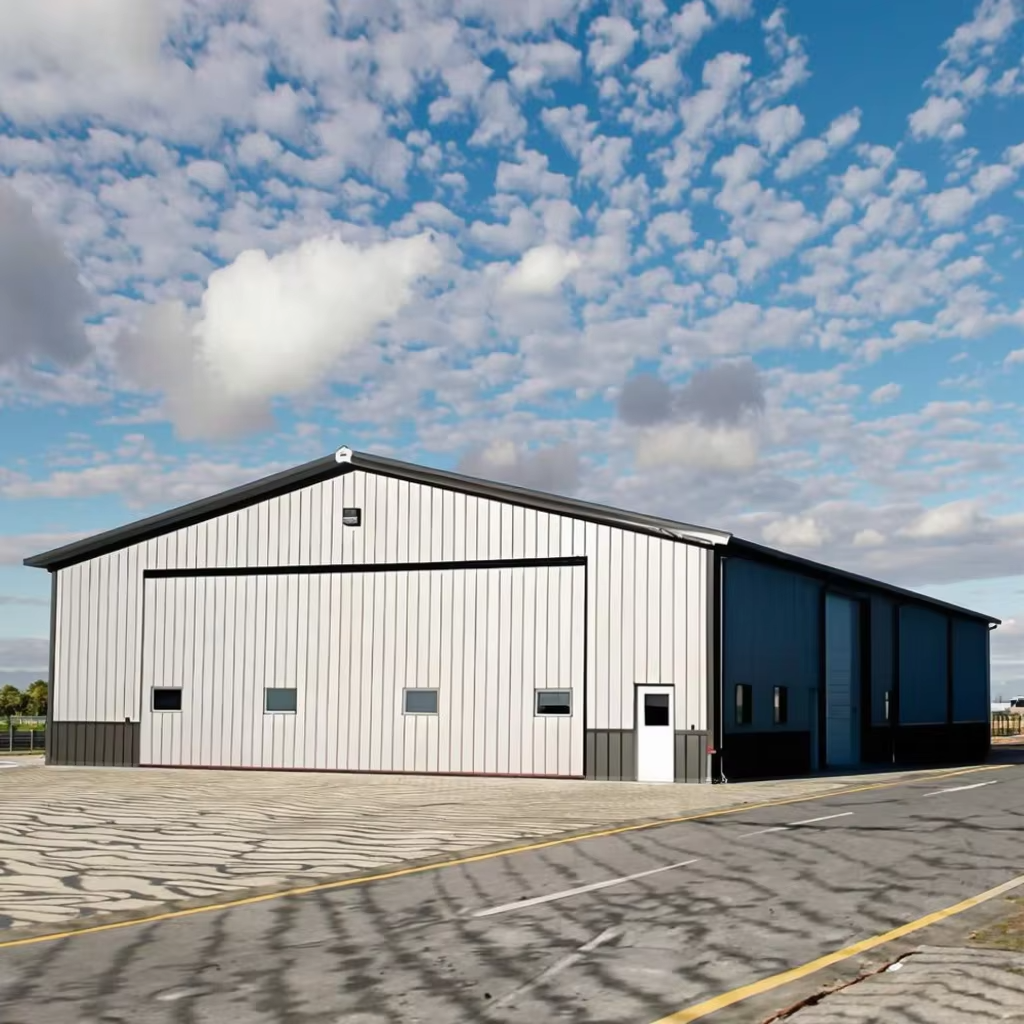
Managing Thermal Expansion and Contraction in Steel Structure Hangars
How temperature fluctuations cause dimensional instability in steel frames
The constant changes in temperature day after day and season to season cause steel frames to expand and contract repeatedly. These movements create problems at the joints between different parts of the structure. Over time, this back and forth puts stress on these connection points which weakens the whole building's stability. When steel gets hot it expands, and when it cools down it shrinks again. If there's nothing stopping this movement, important structural components might start to buckle or warp. This tends to happen most often in areas where heat has to travel a long distance through the metal or where the connections between pieces are too stiff to allow for normal expansion.
Quantifying thermal stress: Coefficient of linear expansion and real-world deflection examples
Steel's coefficient of linear expansion (α = 12 × 10⁻⁶/°C) provides a reliable basis for predicting movement. For example:
- A 30-meter steel beam subjected to a 40°C temperature change expands 14.4 mm (30,000 mm × 40°C × 0.000012/°C).
- In a documented airport hangar project, roof trusses exhibited up to 22 mm of vertical deflection across summer–winter transitions—confirming that field behavior aligns closely with theoretical calculations when movement is not fully accommodated.
Case study: Structural cracking and misalignment in an unmitigated Midwest steel structure hangar during ±35°C seasonal swings
A 2023 Structural Engineering Report analyzed a 60 m × 90 m aircraft hangar in Illinois exposed to annual extremes from –20°C to +15°C. Without dedicated thermal movement provisions, the structure developed:
- Diagonal cracking at column bases due to restrained lateral expansion,
- 18 mm door misalignment—rendering large access doors inoperable,
- Bolt shearing at roof purlin connections from cyclic shear loading.
These failures underscore how unmitigated thermal strain concentrates at interfaces between rigid elements, accelerating fatigue and reducing service life.
Expansion joint design thresholds: When to use sliding bearings vs. gap-based joints in steel hangars
Design thresholds guide selection of appropriate expansion solutions based on span, configuration, and environmental risk:
| Structural Condition | Recommended Solution | Movement Capacity |
|---|---|---|
| Continuous beams < 120m | Sliding bearings | ≤ 50mm |
| Multi-bay structures | Modular gap-based joints | 50–150mm |
| High seismic zones | Hybrid seismic-expansion joints | >150mm |
Sliding bearings handle moderate movement thanks to their low friction Teflon coatings, making them good choices when dealing with uniform expansion situations. For bigger structures needing to move in multiple directions at once, gap based joints work better since they actually create physical separation between different parts of the building using compressible materials filled with sealant. These two methods need to go into the initial design phase instead of being added later on because trying to retrofit them after construction starts can get really expensive. Plus, getting these components right from the beginning ensures everything works well together with things like exterior cladding and roof systems down the road.
Insulation Solutions and R-Value Requirements for Steel Structure Hangars
Comparative thermal performance: Fiberglass batts vs. spray foam vs. insulated metal panels
What kind of insulation gets chosen makes all the difference when it comes to temperature regulation, preventing condensation problems, and how well the building holds up over years. Fiberglass batts are pretty affordable to install with their R-3.1 rating per inch thickness, though they need careful attention to air sealing work and proper vapor barriers if we want to stop heat from escaping through convection currents. Spray polyurethane foam gives better insulation value at around R-6.5 per inch and seals those pesky air gaps too, but there's a catch - the installer must manage moisture levels carefully during application or else vapor can get trapped inside. Insulated metal panels, or IMPs for short, come premanufactured with continuous insulation that hits between R-20 and R-30 system ratings. These panels have this great built-in design that stops thermal bridging right at the framing points, which saves quite a bit of time on installation compared to traditional methods applied on site. Some recent research from building envelope studies in 2023 suggests installation times drop by roughly 40% with these panels.
| Insulation Type | R-Value per Inch | Best Use Case |
|---|---|---|
| Fiberglass Batts | R-3.1 | Budget-conscious projects with robust vapor barriers |
| Spray Foam | R-6.5 | Air-sealing irregular or complex structural shapes |
| Insulated Metal Panels | R-20–R-30 | High-performance thermal, moisture, and structural integration |
Climate-based R-value minimums: ASHRAE 90.1 guidelines for steel structure hangars in cold, mixed, and hot-humid regions
ASHRAE 90.1-2022 establishes climate-responsive minimums to balance energy efficiency, condensation control, and structural stability. Roof insulation must meet:
- R-30 in cold climates (Zone 6) to limit heat loss and prevent ice dam formation,
- R-20 in mixed climates (Zone 4) to manage both heating and cooling loads,
- R-15 in hot-humid zones (Zone 2), primarily for dew point control—not just energy savings.
The numbers we're seeing from actual field measurements indicate that steel roofs without insulation can actually bend over 1.5 inches across a 100 foot span when exposed to really intense temperature differences. When it comes to where to put vapor barriers, location matters a lot. In colder areas, putting them on the inside makes sense because it stops moisture from moving toward the cold metal surfaces. But things get different in those hot humid climates. There, either placing barriers on the outside or going with these smart membrane options works better for controlling moisture that wants to move inward against normal expectations. Getting this right is pretty important for long term building performance.
HVAC and Heating Systems for Optimal Temperature Control in Metal Hangars
Load calculation factors: High ceiling volume, infiltration rates, and usage-specific BTU demands
Getting the right size for an HVAC system depends on three main factors that work together. The first thing to consider is ceiling height. When ceilings go up to around 30 to 50 feet, heat tends to gather at the top instead of staying where people actually are. This means we usually need about 25 to 40 percent more cooling power just to make sure the lower areas feel comfortable. Next up, think about those big overhead doors. They let outside air in pretty steadily, somewhere between 0.8 and 1.2 times every hour according to what ASHRAE has found. That can account for roughly 30 to 50 percent of all the heating or cooling needed in a space. And finally there's how the building gets used. For example, storing planes might only require about 10 to 15 BTUs per square foot to prevent freezing damage. But walk into an active workshop full of workers, machines, and tools, and suddenly we're looking at 35 to 50 BTUs per square foot to keep things both comfortable and running smoothly.
System selection matrix: Radiant tube heaters vs. VRF systems for multi-zone precision
System choice should align with spatial configuration and operational complexity:
| System Type | Best Application | Energy Efficiency | Temperature Precision |
|---|---|---|---|
| Radiant Tube Heaters | Open hangars >15,000 sq ft | 30–40% savings | ±5°C zone control |
| VRF (Variable Refrigerant Flow) | Multi-room facilities with offices/workshops | 25–30% savings | ±1°C zoned control |
Radiant tube heaters provide efficient heating that focuses on warming actual objects and people instead of just the air around them. This approach cuts down on temperature layers forming in large spaces and reduces wasted energy from heating empty volumes. When it comes to VRF systems, they work differently. These systems have special compressors that run on inverters, allowing them to handle both heating and cooling at the same time across different areas. That makes these systems really good fit for places like airplane hangars where there are separate sections such as office spaces, workshop areas, and maintenance spots that need their own climate settings without affecting other parts of the building.
Preventing Condensation and Managing Humidity in Steel Structure Hangars
Dew Point Risks: How Uninsulated Roof Decks Lead to Interior Condensation
When warm, moist air inside meets cold steel surfaces that are below the dew point, condensation happens. This commonly occurs at roof decks where temperatures can drop to around 5 degrees Celsius with about 60% humidity levels. Hangars without proper insulation face this problem all the time since metal exposed to outside conditions cools down quickly, dropping below what's needed for the air inside to stay dry. The result? Water droplets form as vapor turns into liquid. At one actual aircraft storage site, they recorded an amazing 12 liters per square meter of condensate forming every day during winter months. This massive amount of moisture doesn't just sit there either—it speeds up corrosion in important structural parts by three times normal rates and creates perfect conditions for mold to grow on stored gear within just three days if left unchecked.
Vapor Barrier Integration and Ventilation Strategies to Control Moisture
Getting moisture under control means working with both vapor management and proper ventilation together, not treating them as separate things. When installing polyethylene vapor barriers with ratings around or below 0.15 perms underneath insulation layers, this stops moisture from moving towards those cold steel surfaces. At the same time, good HVAC systems should keep relative humidity inside buildings below about 50%. Workshops and other areas with lots of activity need special attention too. Cross ventilation setups that get around 1.5 air changes per hour can cut down on hidden moisture buildup by roughly 40%. Places with really harsh weather conditions absolutely need extra dehumidifiers. From what we've seen in practice, lowering humidity levels even just 5 percentage points below 60% makes a huge difference in preventing condensation problems. Putting vents strategically on roofs, especially at ridges and eaves, helps break up those stagnant air spots where dampness tends to collect. This lets moisture escape naturally without making heating costs go through the roof.
FAQ
What is the effect of thermal expansion on steel structures?
Thermal expansion can cause steel structures to buckle or warp if not properly mitigated. This movement stresses connection points and may lead to structural failures.
What are the recommended insulation types for steel hangars?
Fiberglass batts, spray foam, and insulated metal panels are common choices. Fiberglass batts are budget-friendly, spray foam provides superior air-sealing, and insulated metal panels offer high-performance thermal and moisture integration.
Why are expansion joints important in steel hangars?
Expansion joints allow for controlled movement and prevent structural issues due to thermal expansion and contraction. They should be considered during the initial design phase to avoid costly retrofitting later.
How does condensation occur in uninsulated steel hangars?
Condensation occurs when warm, moist air inside meets cold steel surfaces below the dew point, causing vapor to turn into liquid. This can lead to corrosion and mold growth.
What HVAC systems are suitable for steel hangars?
Radiant tube heaters and VRF systems are suitable. Radiant heaters efficiently warm objects in large spaces, while VRF systems provide precise temperature control across multiple zones.
Table of Contents
-
Managing Thermal Expansion and Contraction in Steel Structure Hangars
- How temperature fluctuations cause dimensional instability in steel frames
- Quantifying thermal stress: Coefficient of linear expansion and real-world deflection examples
- Case study: Structural cracking and misalignment in an unmitigated Midwest steel structure hangar during ±35°C seasonal swings
- Expansion joint design thresholds: When to use sliding bearings vs. gap-based joints in steel hangars
- Insulation Solutions and R-Value Requirements for Steel Structure Hangars
- HVAC and Heating Systems for Optimal Temperature Control in Metal Hangars
- Preventing Condensation and Managing Humidity in Steel Structure Hangars
- FAQ