
 EN
EN
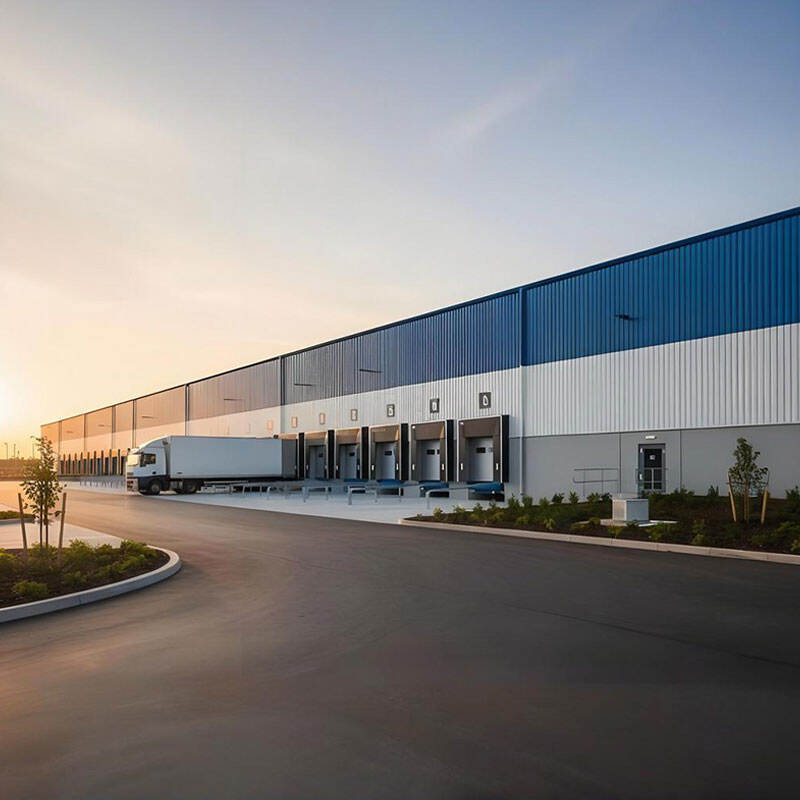
A third-party logistics provider operating out of the Midwest had a problem. Their largest e-commerce client just announced a 40 percent volume increase for the upcoming peak season, and the existing warehouse—a conventional tilt-up concrete building—couldn't handle the additional throughput. The company scouted for available space within a 50-mile radius. Nothing. Every building within that radius was either leased, under contract, or too small. They needed a new facility, and they needed it operational in under five months.
That scenario has become the norm rather than the exception. E-commerce logistics centers are under constant pressure to expand, and the traditional construction pipeline simply cannot keep up. The average conventional warehouse takes nine to eighteen months from design to handover. For an industry where market windows open and close in a single season, that timeline is a non-starter.
Speed to Market as a Competitive Weapon
The fundamental advantage of a prefabricated warehouse lies in parallel execution. While the site gets cleared and foundations are poured, the building components are being fabricated in a factory. The structural frame, roof panels, wall systems, and connections all get manufactured off-site, often while the ground is still being prepared. By the time the concrete cures, the building kit is ready for assembly.
This isn't a marginal improvement. A pre-engineered metal building can reduce construction time by roughly 30 to 40 percent compared to conventional steel or concrete tilt-up alternatives. Some projects see even greater compression. A 10,000-square-foot warehouse that might require four to six months using traditional methods can often be weather-tight in six to eight weeks with prefabricated steel. For larger facilities, the gap widens further.
The numbers from the field bear this out. One analysis of a Home Depot store found that a pre-engineered metal building had a construction schedule of 130 days, compared with 190 days for a baseline concrete tilt building—a full eight-week advantage. That's eight weeks of earlier revenue generation, eight weeks of reduced carrying costs, and eight weeks of competitive positioning that a conventional building simply cannot offer.
Built for the Volumes E-Commerce Demands
E-commerce logistics centers have specific operational requirements that don't always align with conventional warehouse designs. The need for clear-span interior space—unobstructed by columns or load-bearing walls—is non-negotiable for modern fulfillment operations. Automated storage and retrieval systems, conveyor networks, and robotic picking systems all require open floor plans that traditional construction methods struggle to deliver efficiently.
Prefabricated warehouses excel in this regard. The rigid frame design of a steel structure can achieve clear spans of 100 feet or more, maximizing the usable square footage for storage and material handling equipment. The column-free interior allows for flexible layout reconfigurations as operations evolve—a critical feature for logistics centers that frequently adjust their workflows to accommodate changing product mixes and order profiles.
The vertical dimension matters just as much. High-bay storage, which maximizes cubic capacity, is easier to achieve with steel framing than with concrete or masonry. The structural efficiency of steel allows for taller racking systems without the proportional increase in foundation costs that other materials would require.
The Scalability Factor That Conventional Buildings Lack
One of the less obvious but equally important advantages of a prefabricated warehouse is its inherent expandability. E-commerce logistics centers rarely stay the same size for long. A facility that starts as a 100,000-square-foot regional hub might need to grow to 200,000 square feet within two years as market share expands. Conventional buildings don't handle that kind of growth gracefully. Adding onto a tilt-up concrete structure often requires demolishing existing walls, disrupting operations, and managing complex structural interfaces.
A prefabricated steel warehouse, by contrast, is designed with modularity in mind. The frame system allows for end-wall or side-wall expansions with minimal disruption to ongoing operations. New bays can be added, roof lines can be extended, and the building envelope can be modified without taking the entire facility offline. This modular nature makes it an ideal fit for industries that experience dynamic growth patterns.
This isn't just a theoretical advantage. A logistics operator in the Southeast expanded their prefabricated warehouse twice over a three-year period—first by 40 percent, then by another 30 percent. Each expansion took less than half the time of the original build, and operations continued without interruption throughout both phases.
A Case That Illustrates the Difference
A regional e-commerce fulfillment center in the Atlanta area put the speed advantage to the test. The developer needed a 220,000-square-foot distribution center framed and enclosed within a tight window. The conventional construction estimate came in at over nine months. The prefabricated steel approach delivered something entirely different.
The framing went up in nineteen working days. Not nineteen weeks—nineteen days. The building kit arrived on site organized and ready for bolted assembly. The erection crew worked efficiently because every component was pre-punched, pre-cut, and pre-drilled to match the engineering drawings. No field modifications. No waiting for materials. No weather delays stopping the factory line.
That project didn't just meet the deadline. It beat it by a margin that changed how that developer approached every subsequent logistics center project.
The Cost Dynamics That Favor Prefabrication
Speed translates directly into cost savings, but the financial advantage of prefabricated warehouses goes beyond just shorter construction timelines. Reduced on-site labor requirements cut labor costs significantly. Factory fabrication minimizes material waste, which runs high on conventional construction sites. The controlled manufacturing environment ensures consistent quality, reducing the need for costly rework.
The table below compares key metrics for a typical 100,000-square-foot e-commerce logistics center:
|
Factor
|
Conventional Construction
|
Prefabricated Steel Warehouse
|
|---|---|---|
|
Design-to-handover timeline
|
9–18 months
|
3–6 months
|
|
On-site labor requirement
|
High (multiple trades)
|
Reduced (bolted assembly)
|
|
Weather impact on schedule
|
Significant delays common
|
Minimal (fabrication off-site)
|
|
Expansion capability
|
Complex, disruptive
|
Modular, straightforward
|
|
Clear-span interior
|
Limited by column spacing
|
100+ feet achievable
|
These aren't small differences. They represent fundamental shifts in how a logistics center project gets financed, staffed, and brought to market.
Where Prefabricated Warehouses Fall Short
No building system is perfect for every application, and prefabricated warehouses have their limitations. Very tall structures—those exceeding four or five stories—are generally better served by other construction methods. Sites with extremely poor soil conditions may require additional foundation engineering that offsets some of the speed advantages. And for projects with highly irregular footprints or unusual architectural requirements, a custom conventional design might be the better fit.
For the vast majority of single-story e-commerce logistics centers, however, the prefabricated approach delivers a combination of speed, scalability, and cost-effectiveness that conventional methods struggle to match. The market has recognized this. E-commerce warehousing in North America alone is projected to reach $16.45 billion by 2031, and a growing share of that capacity is being built with prefabricated steel.
Making the Right Call for Logistics Growth
The decision to go with a prefabricated warehouse for an e-commerce logistics center ultimately comes down to one question: how fast does the facility need to be operational? If the answer is measured in months rather than years, the prefabricated route is worth serious consideration. The speed advantage alone—30 to 50 percent faster than conventional construction—can make the difference between capturing a market opportunity and watching it pass by.
Manufacturers like Huaying Weiye Steel Structure have built their production systems around the kind of schedule compression that e-commerce logistics demands. The factory fabrication process runs parallel to site work, and the building kits are organized for rapid on-site assembly. In a sector where time windows are measured in seasons, not decades, that capability isn't just convenient—it's essential.
Table of Contents
- Speed to Market as a Competitive Weapon
- Built for the Volumes E-Commerce Demands
- The Scalability Factor That Conventional Buildings Lack
- A Case That Illustrates the Difference
- The Cost Dynamics That Favor Prefabrication
- Where Prefabricated Warehouses Fall Short
- Making the Right Call for Logistics Growth