
 EN
EN
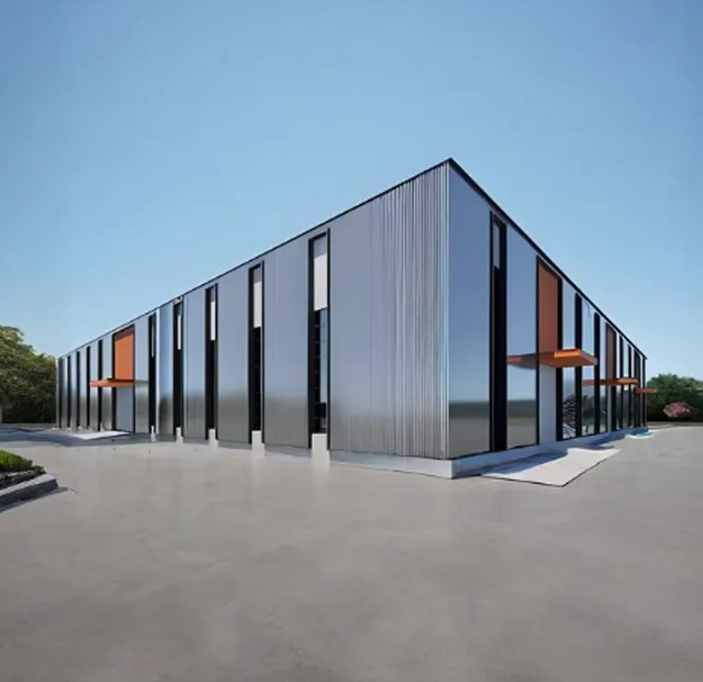
Overview of Pre-Fabricated Workshop Workflow Design
A prefabricated workshop is not just a building. It is a production machine in its own right, and like any machine, its output depends on how well its components work together. The layout of cutting stations, assembly bays, material storage, and personnel pathways determines throughput just as much as the equipment inside does. Designing for workflow efficiency means thinking about movement - of materials, of workers, of finished components - before the first structural frame is even fabricated.
The difference between a well-designed workshop and a poorly conceived one shows up in the numbers. Facilities that map workflows upfront reduce cross-department backtracking by 22% compared to ad-hoc layouts. That is not a marginal improvement. That is hours of labor per week that go into productive work instead of walking empty-handed from one end of the shop to the other.
Mapping Material Flow Before Layout Decisions
The most common mistake in workshop design is placing equipment where it fits rather than where it belongs in the production sequence. A cutting station at the wrong end of the shop forces long material hauls across the floor. A welding bay too far from assembly creates unnecessary handling steps. The solution is straightforward: map the complete material flow from raw steel intake to finished component dispatch before deciding where anything goes.
Digital tracking or spaghetti diagrams reveal collision points and inefficiencies that are not obvious from a floor plan. One steel workshop identified that beam handling time could be reduced by 18% through three specific interventions: co-locating cutting and drilling stations, implementing kanban-controlled buffer zones, and standardizing lift equipment charging areas. None of these changes required new machinery. They required thinking about how materials actually move through the space.
Zoning That Separates Speed from Safety
High-velocity material routes and personnel walkways do not mix well. When forklifts and workers compete for the same floor space, productivity drops and incident rates climb. Physical barriers or clear floor markings that separate these flows reduce loading time by roughly 15%. Unidirectional material flow systems prevent gridlock at intersections, keeping both throughput and safety high.
The zoning strategy should follow the natural progression of production: raw material intake, primary processing, sub-assembly, and final quality control. This line-of-sight layout ensures that materials move in one direction without backtracking, which is responsible for up to 15% of delays in modular workflows. Storage areas for raw materials, work-in-progress, and finished goods should be clearly separated. Research from the Material Handling Institute indicates that separating these zones reduces inventory location time by roughly 33%.
The Case for Co-Locating Complementary Operations
A mid-sized fabrication facility in the Midwest redesigned its workshop layout around the principle of co-location. Previously, cutting, drilling, and welding were in separate bays. Components traveled hundreds of feet between operations, and workers spent a significant portion of each shift waiting for parts to arrive. The redesign grouped cutting and drilling stations adjacent to the welding and assembly area. The result? Beam handling time dropped, and the shop increased its weekly output without adding a single new piece of equipment.
The principle applies beyond fabrication. Quality control stations placed next to assembly areas catch defects early, before components move further down the line. This prevents the costly scenario of reworking parts that have already been transported to another section of the shop. Small spatial changes yield significant efficiency gains - relocating welding stations just 8 meters closer to assembly areas eliminated 14 daily labor hours in one documented case.
Simulation Tools That Predict Problems Before They Happen
Physical reconfiguration is expensive and disruptive. Digital simulation tools offer a better way. Discrete event simulation platforms like FlexSim can identify potential improvements in crane utilization - one study found a 27% potential improvement before any physical reconfiguration took place. Cloud-based platforms allow engineering teams to collaborate on layout iterations in real time, reducing costly trial-and-error during implementation.
The value of simulation is not just in finding the optimal layout. It is in understanding how the workshop will perform under different conditions - peak production, equipment downtime, material shortages. A layout that works well at 80% capacity may fail at 100%. Simulation reveals these thresholds before concrete is poured and steel is erected.
Fixed vs. Dynamic Zoning: Knowing When to Commit
Not every workshop benefits from the same zoning approach. Facilities that produce a consistent product mix benefit from fixed zoning, where each operation has a permanent location and the workflow is stable. This predictability allows for optimization of material handling paths and equipment placement.
Workshops that handle varied projects with different material requirements may benefit from more dynamic zoning. Modular workstations, flexible material storage, and reconfigurable assembly areas allow the shop to adapt to changing production demands. The trade-off is that dynamic zoning requires more discipline in material tracking and workflow management. There is no single right answer - the right approach depends on the specific production mix and volume.
Limitations That Deserve Honest Discussion
Designing for workflow efficiency does not guarantee efficiency. Operator behavior, maintenance schedules, and material quality all affect throughput. A well-designed layout cannot compensate for poor training or unreliable equipment. Similarly, the benefits of zoning and co-location diminish if work-in-progress inventory is not managed properly. Kanban systems and pull-based production controls are necessary to realize the full potential of an efficient layout.
Another consideration: future flexibility. A layout optimized for current production may become a constraint when the product mix changes. Designing with expansion and reconfiguration in mind - standard bay sizes, accessible utility connections, modular workstations - preserves the ability to adapt without starting over.
Enterprise Manufacturing Strength
Huaying Weiye Steel Structure manufactures prefabricated workshop buildings with ISO 9001-certified production processes and an annual steel output of 20,000 tons. The company's 13,000 sqm steel workshop and 10,000 sqm panel facility support precision fabrication with automated CNC lines and laser cutting systems. For operations that require efficient workflow from day one, the quality of the building envelope and the precision of the structural components matter as much as the layout inside.
Table of Contents
- Overview of Pre-Fabricated Workshop Workflow Design
- Mapping Material Flow Before Layout Decisions
- Zoning That Separates Speed from Safety
- The Case for Co-Locating Complementary Operations
- Simulation Tools That Predict Problems Before They Happen
- Fixed vs. Dynamic Zoning: Knowing When to Commit
- Limitations That Deserve Honest Discussion
- Enterprise Manufacturing Strength